
COORDINATORreadygpt-5.5 / Medium
Coordinator connected. Awaiting your message.
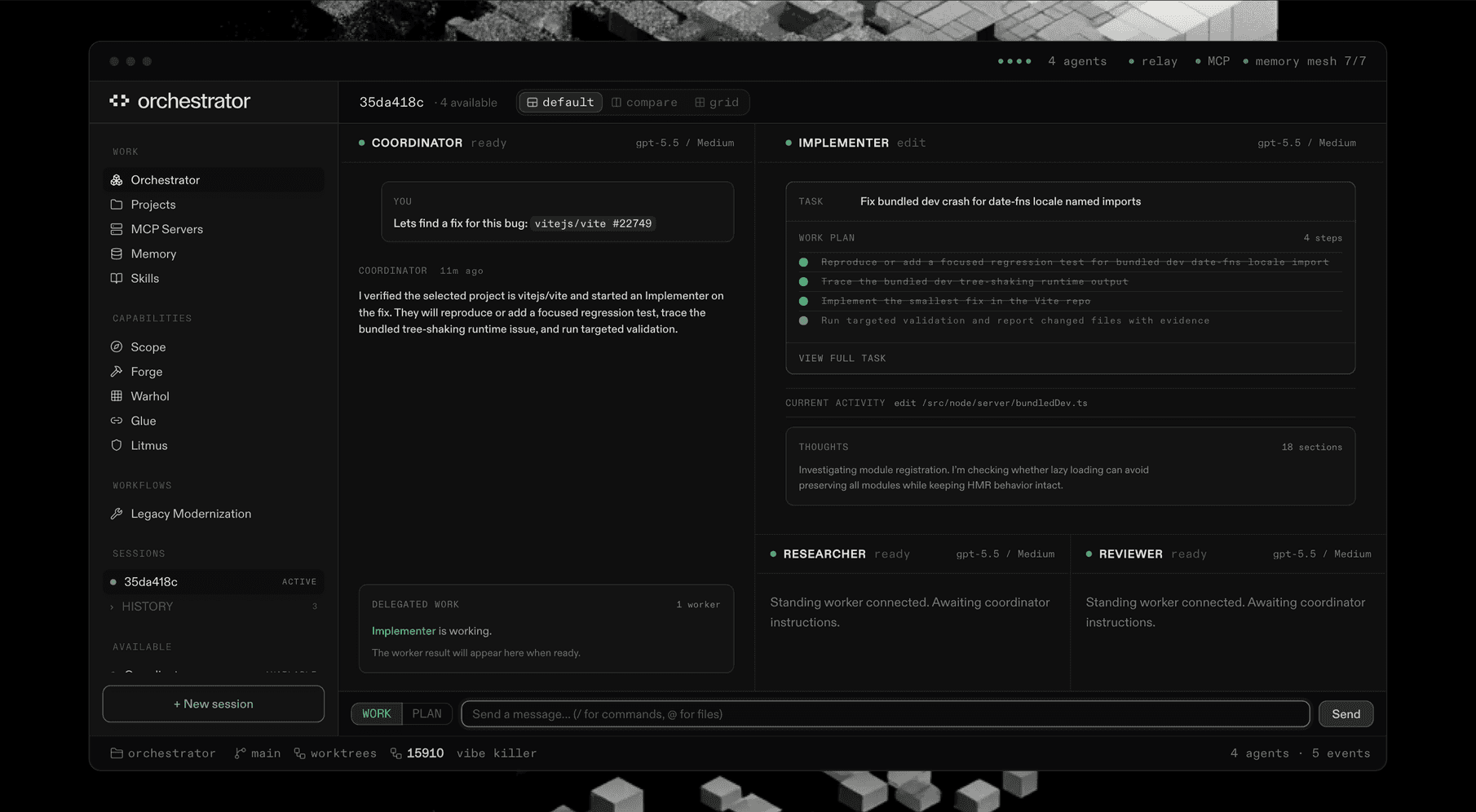
Spin up to 20 specialized agents that are coordinated to work on one complex software engineering task.
An 8.6% lift on SWE Bench Pro means Orc will give your eng team extra juice.
Skills that are automatically added as they are identified in the codebase.
SOC 2 Type II Certified with the ability to use any frontier model.
Up to 8.6% lift on SWE Bench Pro compared to all other harnesses.
Model lift (GPT 5.4 High)
Frontier models are good at solving smaller tasks, but struggle with long horizon software engineering work. Orchestrator solves this.
Orchestrator is designed for high pressure demanding engineering orgs that cannot afford to make mistakes in production.
Orchestrator vs Claude Code — Complex Task Benchmark
Focus on building clear specs and let Orchestrator guide multiple coding agents to challenge each other and execute like an actual software team.

Choose any frontier model and bring your own keys. Orchestrator will significantly boost model performance from GPT to Kimi.
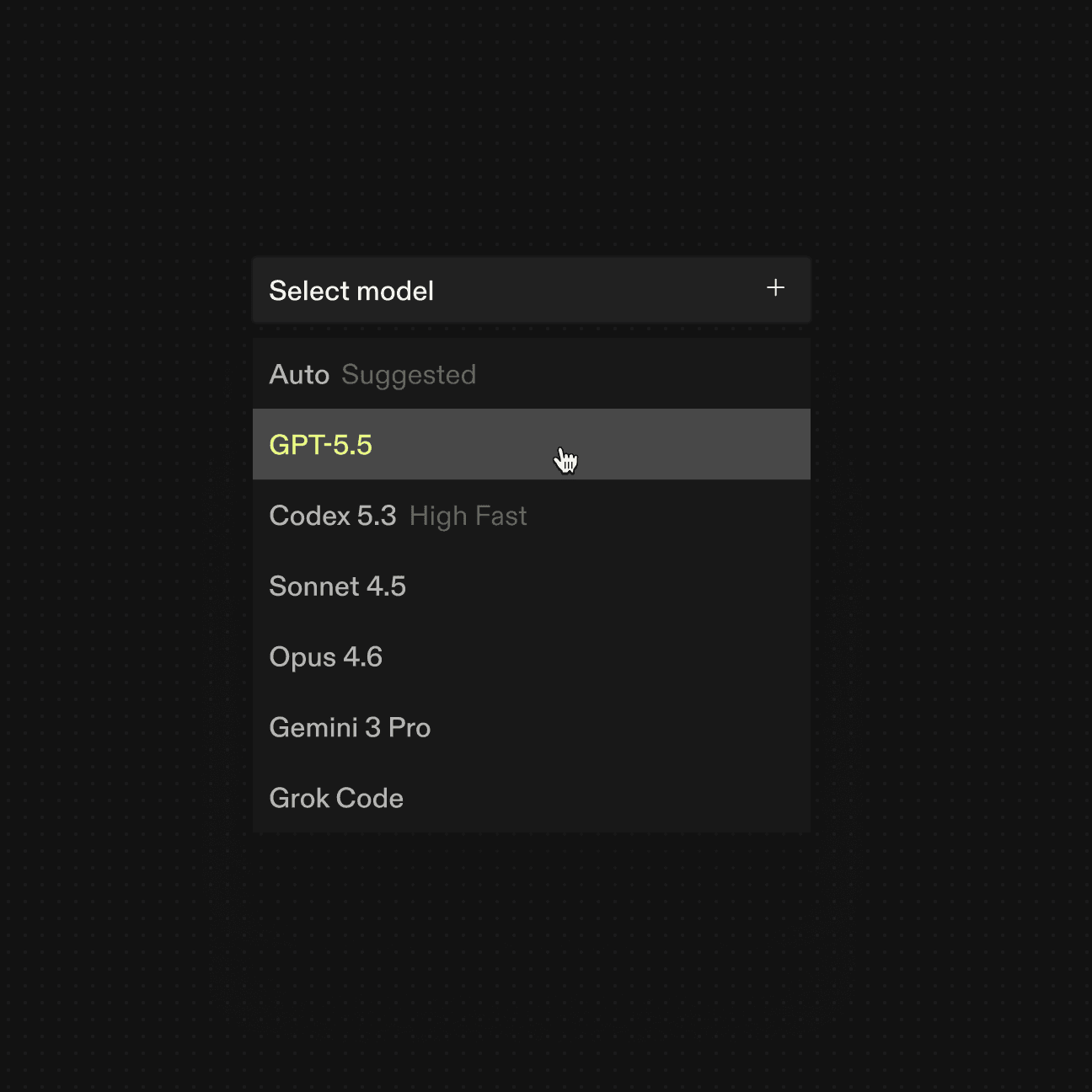
Orchestrator automatically identifies relevant skills and prunes context to reduce context bloat.

Orchestrator is a multi-agent coding platform for production software engineering. It coordinates specialized agents that plan, implement, audit, test, and review complex engineering work against a real codebase.
Agentic coding is software development where AI agents plan, write, test, and review code with limited human prompting, rather than autocompleting a line at a time. Orchestrator runs many specialized agents together under governance and review, which is what makes agentic coding reliable enough for production.
Agent orchestration is coordinating multiple AI agents so they work together on one goal, instead of leaning on a single agent. For software, that means planning, coding, auditing, and review can run in parallel and check each other. Orchestrator is a multi-agent coding platform built on this approach, with governance, shared memory, and review gates that bring the output to production quality.
Most AI coding assistants are a single agent that generates code and hands it back. Orchestrator is a coordination and verification layer: specialized agents with role-scoped permissions do the work, while adversarial reviewers challenge it before it's accepted. It stays coherent across multi-hour tasks, remembers lessons from past runs, and runs work through structured, machine-validated flows (spec-to-code, refactor, test), all fully auditable. The difference isn't more agents; it's the governance, memory, and verification built around them.