
COORDINATORloadinggpt-5.5 / low
DELEGATED WORKrouting
launching agent tracksAuditor queued.
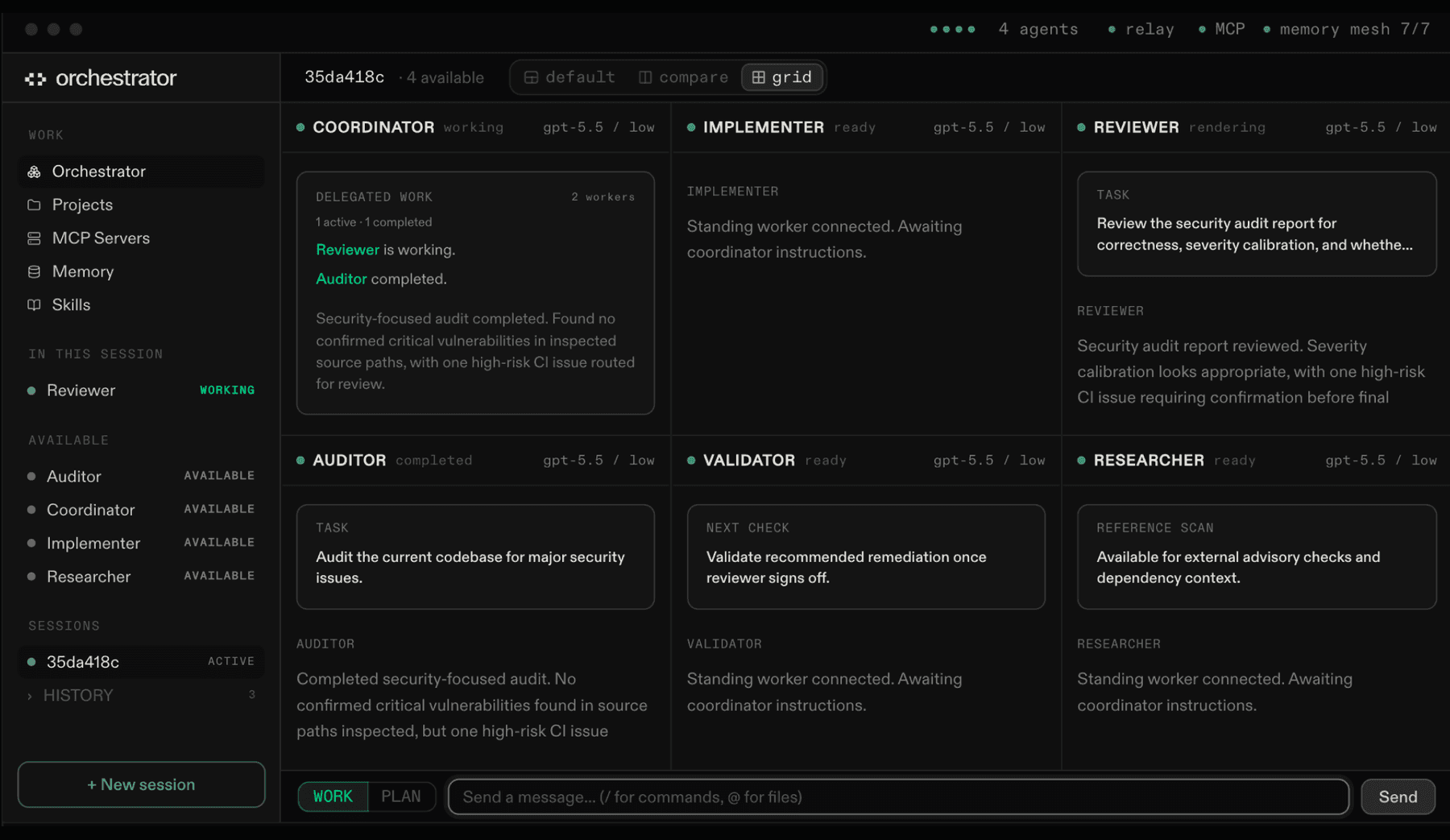
Orchestrator runs governed, specialized agents in parallel against your real codebase
The kind of work that used to take a sprint, compressed into hours, with review gates that catch drift before it lands.
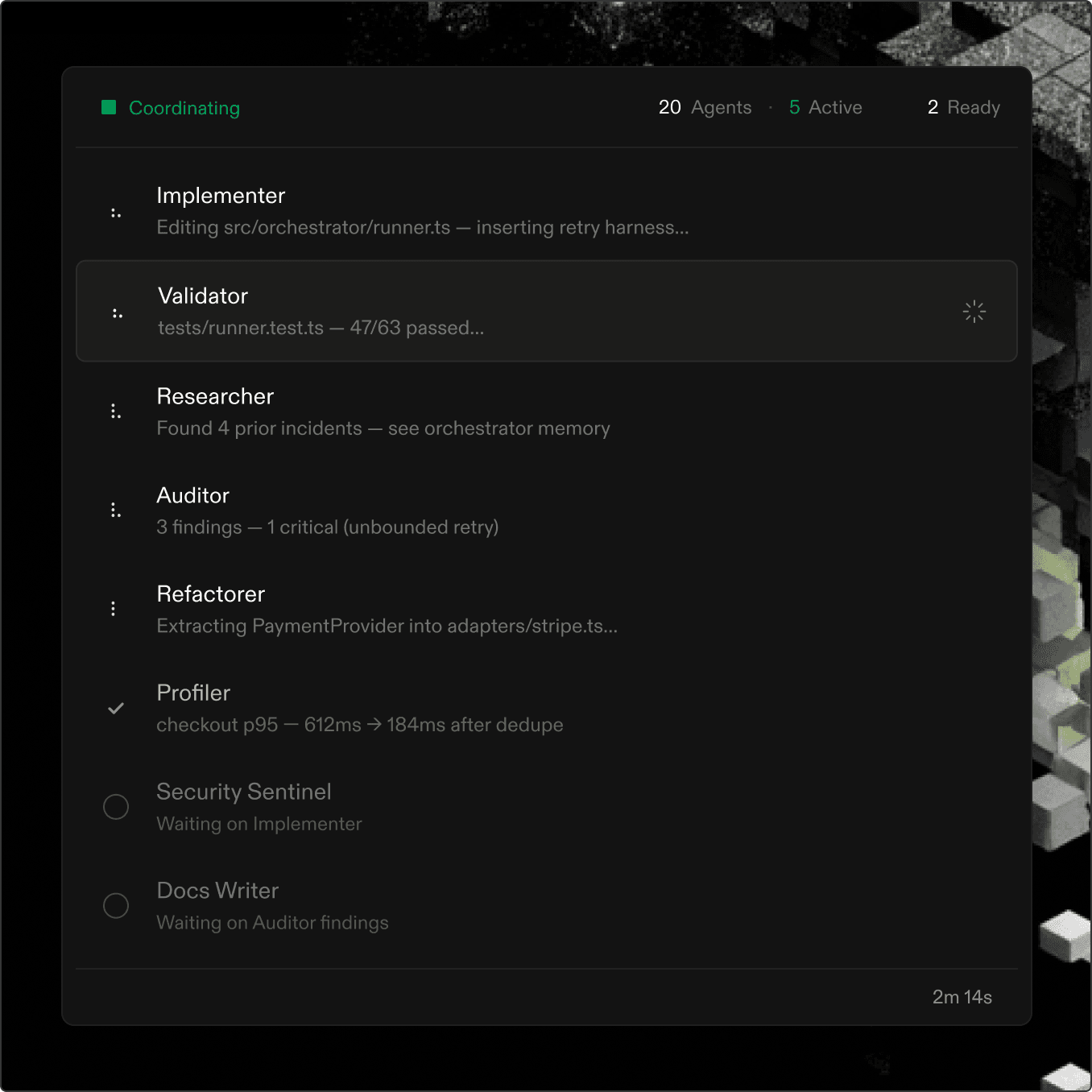
Multi-agent orchestration for complex engineering. So you ship code that's scalable, maintainable, tested, and secure.

Keeps every agent inside an established rule system - preventing deadlocks, stopping loops, and catching drift early.
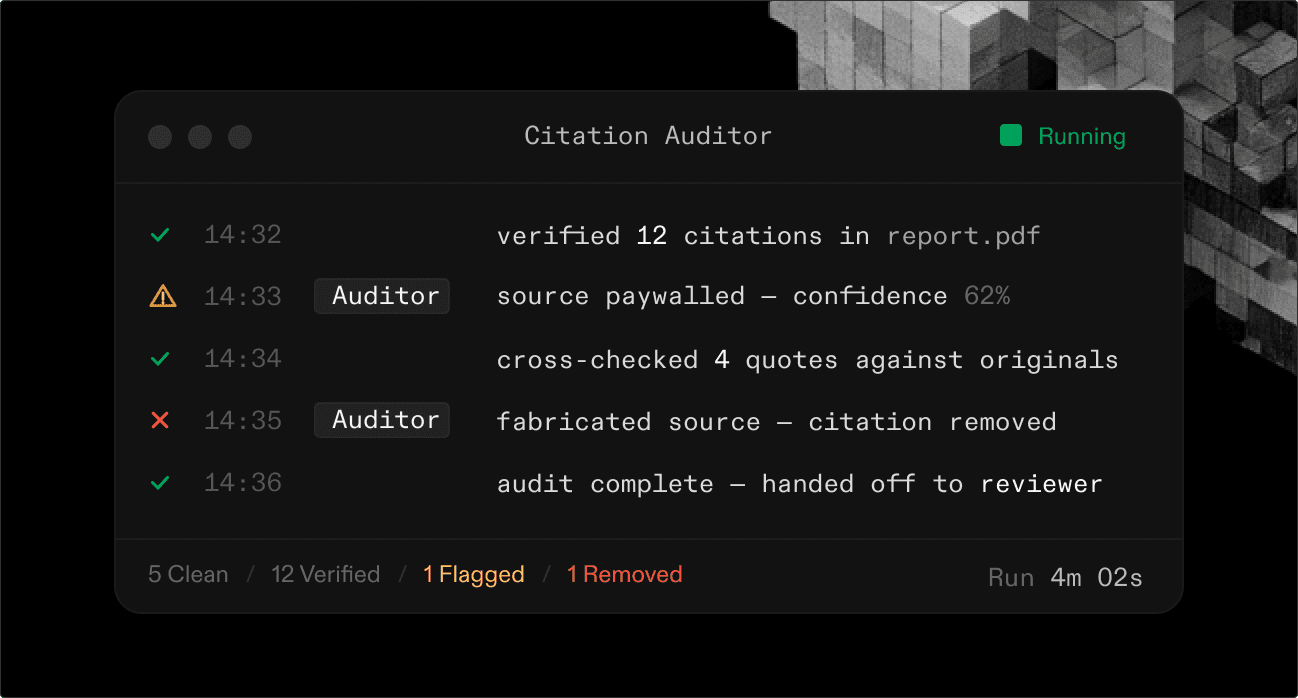
Every Orchestrator run spins up specialized agents that each do one job well.
Top-level orchestration agent. Drives the workflow state machine, executes launch batches, and delegates all execution to worker roles.
Generates production-ready code using tools, following OpenAPI specifications exactly.
Performs comprehensive quality audits using Litmus checks with severity-prioritized reporting.
Reviews code for correctness, spec compliance, and quality. May formally challenge implementations.
Monitors system-wide patterns, detects anomalies in agent behavior, and provides health assessments.
Gathers context, researches documentation, and analyzes specifications before implementation.
Validates live APIs against specifications by starting servers, running tests, and comparing responses.
Designs high-level strategies, evaluates trade-offs, plans multi-phase execution sequences. Provides recommendations the Coordinator acts on.
Multi-agent orchestration coordinates specialized AI agents that each handle a defined role, such as planning, implementation, auditing, research, validation, or review, so complex software work can move in parallel.
Orchestrator has 11 distinct agent roles: coordinators, implementers, reviewers, auditors, validators, researchers, security checkers, strategists, meta observers, recorders, and UI implementers. A single run can use up to 20 agents drawn from these roles.
Orchestrator uses adversarial governance, review gates, rule systems, and role-specific responsibilities to catch drift, stop loops, and keep agents aligned with the task.
Yes. Orchestrator is designed around audited and reviewed output, making it a natural fit for teams that already rely on CI, pull requests, and human review gates.